
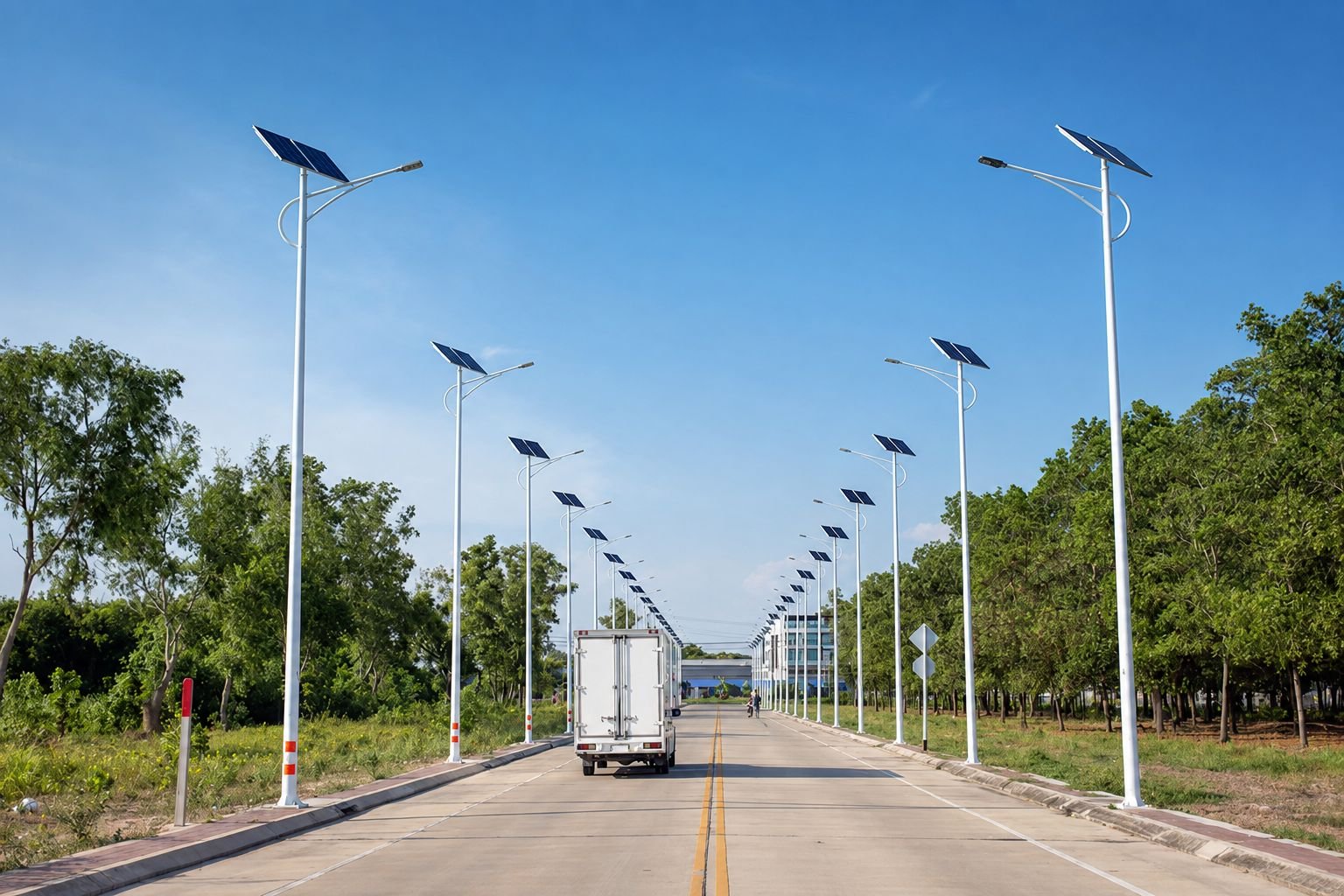
Public spaces need reliable lighting to remain safe, accessible and functional after sunset. However, conventional street lights require extensive electrical wiring, regular power supply and ongoing electricity expenses. Solar street lights provide a practical alternative by using sunlight to generate and store clean energy during the day. They automatically illuminate roads and public areas at night, making them suitable for villages, parks, highways, campuses and other outdoor locations.
A solar street light system generally includes a solar panel, LED light, rechargeable battery, charge controller and mounting structure. During daylight hours, the solar panel converts sunlight into electrical energy and stores it in the battery. At night, the stored energy powers the LED light automatically.
Modern systems may also include dusk-to-dawn sensors, motion sensors and intelligent lighting controls to improve performance and reduce unnecessary energy consumption.
Solar street lights operate using renewable solar energy. They do not depend on grid electricity, helping local authorities, housing societies and organisations reduce monthly power expenses.
Proper lighting improves visibility for pedestrians, cyclists and drivers. Installing solar street lights in parks, bus stops, pathways and public roads can help reduce accident risks and create a safer environment after dark.
Remote villages and developing areas may not have access to dependable electricity infrastructure. Solar street lights can operate independently from the electrical grid, making them useful for rural roads, farms and isolated locations.
Solar street lights do not require underground cabling or complicated electrical connections. This makes installation faster and allows the lights to be installed in areas where traditional wiring may be difficult or expensive.
Built-in sensors automatically switch the lights on at sunset and off after sunrise. Motion-sensor models can adjust brightness depending on movement, helping extend battery backup while maintaining proper illumination.
Before selecting a system, consider the required brightness, pole height, battery capacity, expected operating hours and available sunlight. The system should also include weather-resistant components suitable for local environmental conditions. Choosing the correct solar panel and battery combination ensures consistent lighting throughout the night.
WhatsApp us